
Published by Honour
From the chaotic concrete of Port Harcourt’s Mile 1 to the academic discipline of theatre arts, an
independent pioneer constructs an ever green world before demanding the centre
stage.
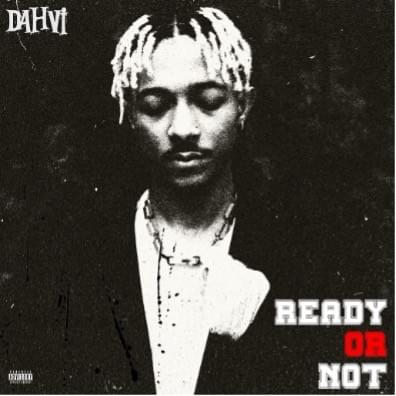
There is a quiet, radical revolution rewriting the contemporary Afro-pop. For years, the global music ecosystem has looked to Lagos as the singular gateway to Nigerian sound, but an unyielding, avant-garde tide from the Niger Delta is proving that the wider Afropop plexus holds its own gravity. At the vanguard of this new paradigm is Dahvi, an intentional, independent multi-hyphenate who has quietly spent the last half-decade refining his voice far away from the hyper-accelerated machinery of overnight viral
culture.
He grew up between Port Harcourt’s Mile 1 and quieter Omoku, studied Theatre Arts, and spent six years refining his sound. Now, with the sensual, confident single “Mood” and a sophomore EP titled Ready Or Not (out May 29th), Dahvi is betting entirely on himself. We sat down with the rising star to dissect his roots, his methodology, the burden of independent patience, and the blueprint of his impending era.
PART 1: THE ORIGIN STORY
1. Mile 1 in Port Harcourt has an undeniable energy, while Omoku offers a different
pace of life. How do those two environments in Rivers State clash or co-exist in
the music you make today?
Dahvi : Growing up in Mile 1 and life in Omoku were two different experiences. Mile 1 days didn’t have much experience outside the norm for an average family, so it was more about my calm side from growing up. Omoku had plenty of experiences, from love to heartbreak to chaos and violence, I witnessed and saw first-hand in some of my songs, I express my experiences around these emotions.
2. Rivers State has birthed some of the most uncompromising icons in Nigerian music like Burna Boy and Duncan Mighty. What is it about the waters or the culture in PH that breeds artists who refuse to blend into the background?
Dahvi : There is an unapologetic authenticity embedded in Rivers State. Weare raised to be entirely true to who we are, without compromise. The environment demands that you stand firm in your stance, and that natural grit transfers directly into the music. When you look at icons like Burna Boy or Duncan Mighty, you hear artists who carry their roots proudly on their chests. We don't know how to dilute ourselves to fit into existing templates. It’s a belief that if you are going to speak, you must speak with your full chest so that the world has no choice but to listen.
"Omoku had plenty of experiences, from love to heartbreak to chaos and violence I witnessed first-hand... I express my experiences around these emotions."
PART 2: THEATER ARTS AS METHOD
1. You studied Theatre Arts at UNIPORT. Most people think performance is performance. But I want to push on that. What did you learn about character, presence, and audience psychology that directly makes you a better recording artist?
Dahvi : The theatre builds you in ways that go far beyond just the ability to display good stage performances. More than anything, it instils the essence of discipline in your craft and gives you the psychological mindset to always keep it going, no matter what variables are thrown at you. That rigorous training played a massive part in my growth as an artist. It teaches you how to project energy, how to command a room before you even speak, and how to understand what an audience needs to feel.
2. Actors talk about 'living truthfully under imaginary circumstances.' When you write a song like 'Mood', playful, flirtatious, confident, are you playing a version of yourself, or are you stepping into a character?"
Dahvi : [Laughs] No, it is the original version of myself in every single song. I am giving you all of me. There are no masks or fictional characters here. If a track feels playful, flirtatious, or confident, it’s because those are genuine layers of my actual personality and real life. The theatre taught me how to channel these parts of myself into my work, but the emotion is always 100%.
3. Has your theatre training ever made you overthink a recording? Like, "This vocal take isn't hitting as it should"?
Dahvi : Questioning and deeply criticising my own craft is something Iactually grew up on, even long before I stepped foot into the university theatre. I have always overthought every single sound I created before the audience ever gets a chance to hear it [laughs]. The training probably refined that analytical side, but the perfectionism has always been there. I am my own toughest critic because I know exactly how much weight a single line or vocal delivery can carry.
PART 3: THE LONG GAME
1. The current Afropop landscape is fast-paced, and everyone is looking for a 15-second viral sound bite. You’ve been building your catalogue since 2019. How have you protected your peace and stayed disciplined without succumbing to the pressure of 'overnight' internet fame?
Dahvi : I am aware of the trends, but I am not trying to build quick, fleeting popularity or rush the natural process of true greatness. I know deeply that great things take real time to manifest, and I am banking on that truth. I also don’t write or design my songs for temporary viral moments or fleeting internet trends; I intentionally make them evergreen. I want to build a discography so timeless that you can always come back to these records, no matter how much time has passed.
"I don't make my songs for temporary vitality or trends;I make them evergreen, so you can always come back to them, no matter the
time."
2. You've said you're betting on yourself. That's aromantic phrase. But be real, was there a specific week, a specific night, where you almost crashed out? Almost quit? What kept you in the room?
Dahvi : Despite music being my passion, there have been many, many nights where those heavy thoughts crawled in, of course. Being independent is an intense journey. But at the end of the day, I realised that life would be completely pointless without a clear purpose. Music is my purpose. That realisation is exactly what keeps me in the room and forces me to push on, no matter how dark the night gets.
PART 4: DECONSTRUCTING "MOOD"
1. Your latest single, 'Mood', feels effortless, but making something feel effortless usually requires a lot of hard work. What was the exact energy in the studio the day 'Mood' was born?
Dahvi : It’s interesting because I actually recorded "Mood" entirely in my own personal space, completely alone in my home studio. It was just a random day, and I was sitting there listening to different instrumentals. When that specific beat came on, the energy just locked in naturally. Because I was alone in my comfort zone, there was no outside pressure, no overthinking; I was locked in.
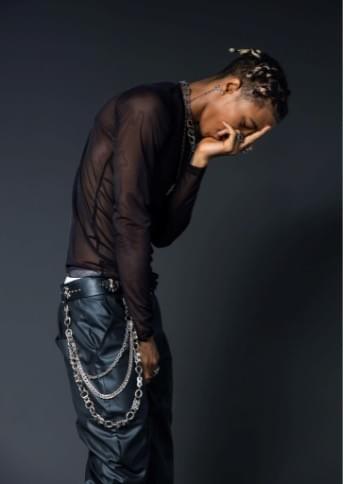
1. In theatre, there's a concept of"blocking" (where you stand, how you move on stage). When you perform "Mood" live, how have you blocked that song differently than, say, "Wildlife"?
Dahvi : I absolutely love to express myself when I'm on a stage. For a track like "Mood," which is centred around physical chemistry and care-free attraction, the blocking has to mirror that smooth, late-night energy. Building a performance model that incorporates some extra interesting, fluid movement and choreography on stage for "Mood" would be
absolutely lit.
PART 5: THE SOPHOMORE ERA
1. The tag line for this era of your career is 'Ready Or Not,' and there’s a sense that you are actively betting on yourself. What does 'betting on yourself' look like practically when you’re an independent artist on the cusp of a major release?
Dahvi : Practically, it means waking up every single day knowing that my craft is quite literally all I have. Because I have that clarity, I have no choice but to bet everything on myself. I don't look around for external rescue or sudden validation.
I know the quality of the music I am making, and I know that it is just a matter of time before the rest of the world fully aligns with it. It's about executing the work and staying patient.
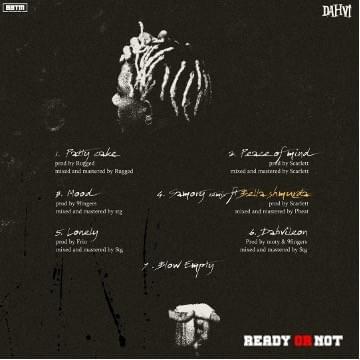
1. Your new EP drops on May 29th. If Dahvil on was your introduction, what is the statement you are trying to make to the world with this sophomore project?
Dahvi : That whoever comes across it will be locked in, and so my army will grow larger, and then the name will make sense
2. Last question, finish this sentence: 'I'll know I've arrived not when I'm famous, but when...'
Dahvi : … I get my family and me, especially my mom, a much better life, relaxed financially and mentally.