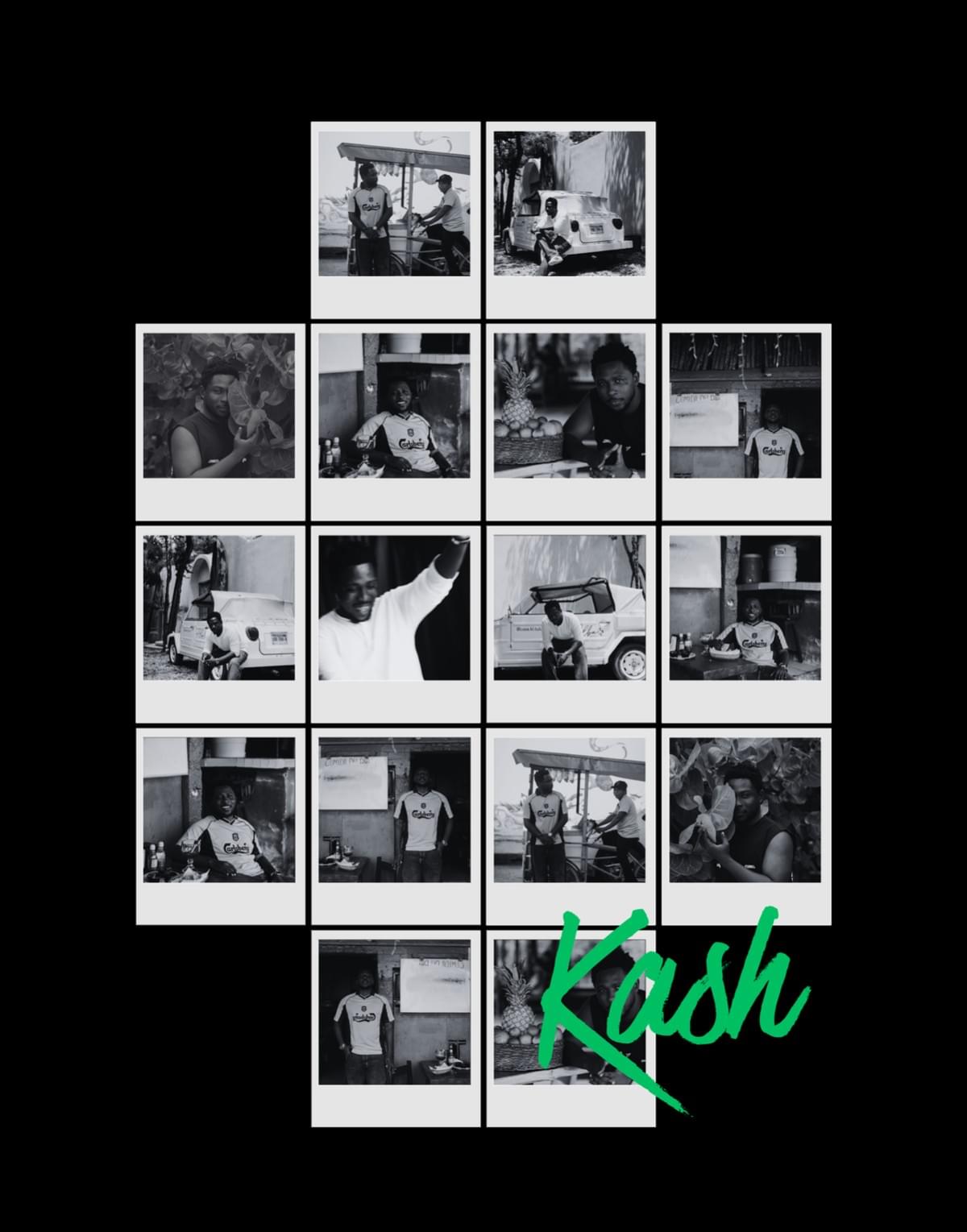
Published by Reynolds Mark
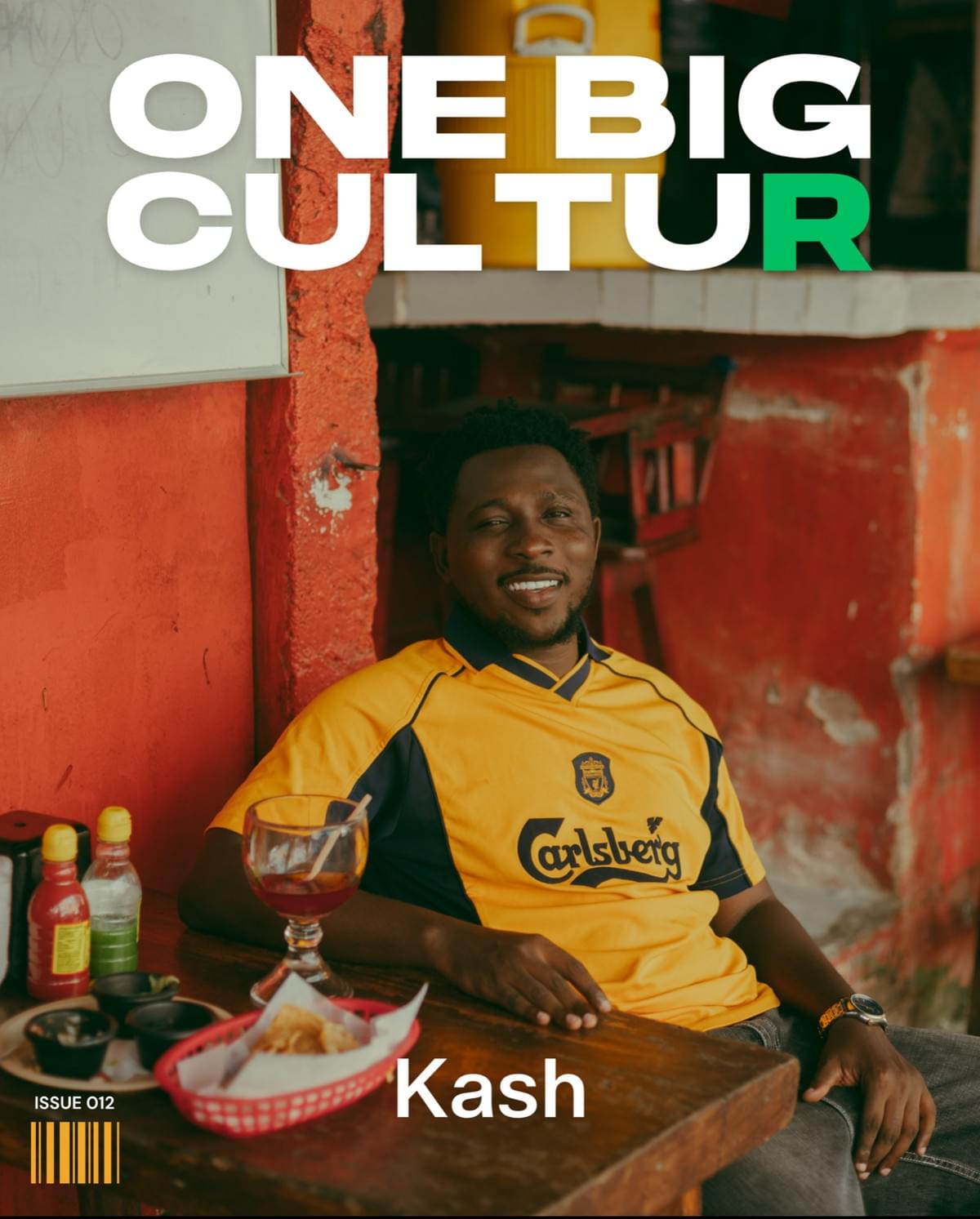
Kash on Faith, Photography, Lagos Culture & Capturing Icons
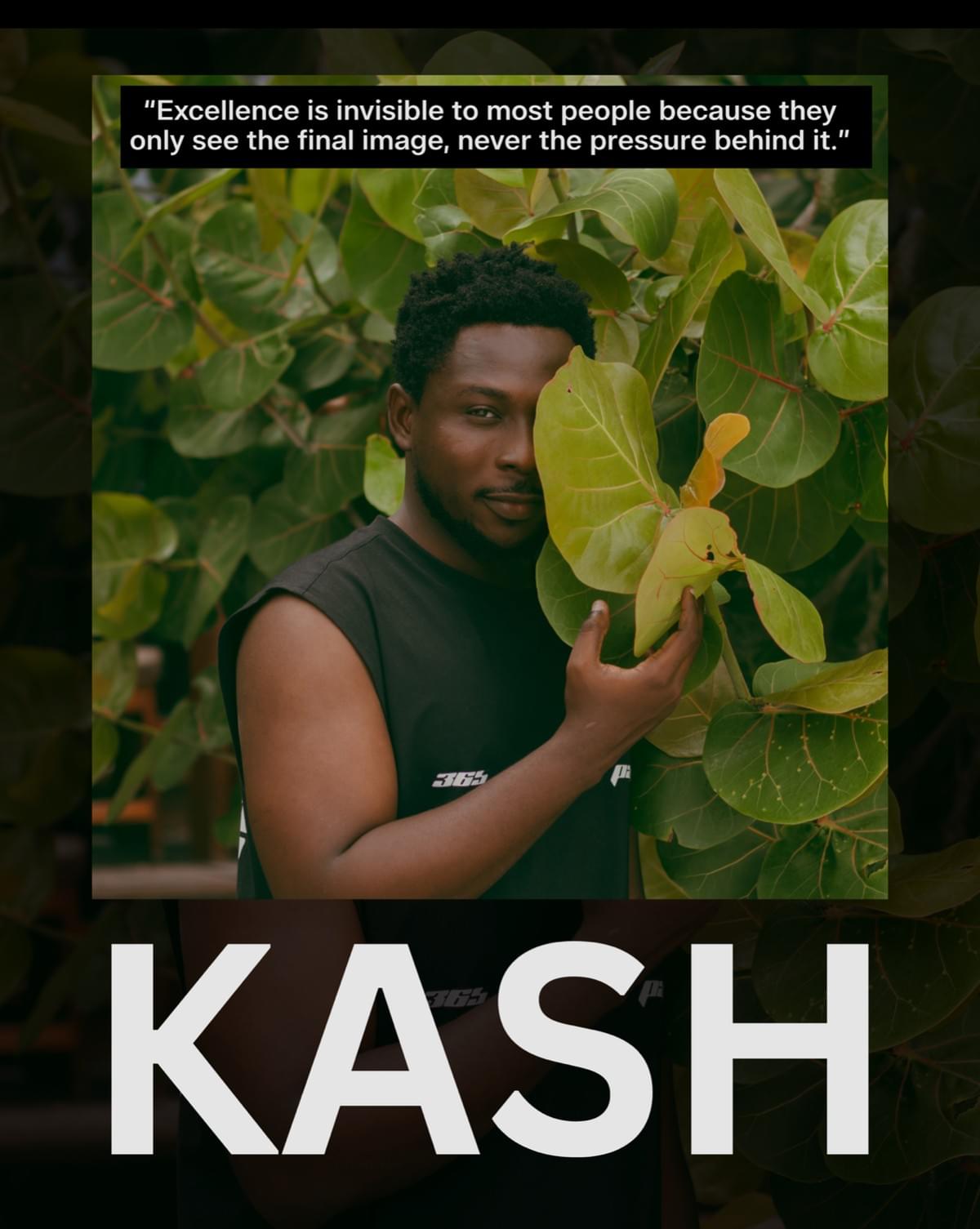
In a world driven by fast visuals and fleeting moments, Faje Elijah Kashope has built a name for himself through intentional storytelling, raw emotion, and a relentless pursuit of excellence. From studying dentistry in Benin to photographing some of Nigeria’s most recognizable faces and brands, his journey is one rooted in faith, curiosity, and purpose. For this exclusive conversation with Kash. Reynolds Mark sits down with the Lagos-based photographer to discuss photography, God, creative pressure, Nollywood, and the mindset that transformed a hobby into a career.
REYNOLDS: First, bro, it’s a pleasure having you on One big cultur 2026 Creatives Edition. We’re excited to have you here.
So, let’s start from the beginning who is Kash?
KASH: That’s actually funny because I’ve done a lot of interviews and nobody has ever really asked me that before.
If I had to describe who Kash is, first of all, I’d say Kash is someone who is always seeking God. That’s probably the most important way I can describe myself. I’m someone constantly trying to align with God and understand His direction for my life.
Beyond that, I’m someone who tries. I’m imperfect like everyone else, but I genuinely try. I care deeply about people and the problems of the world. I’m the kind of person who stays awake at 3AM wondering why people are hungry somewhere in Colombia. When people tell me about their struggles, I don’t just brush past it I genuinely carry it with me.
I’m also obsessed with excellence. Whatever I do, I want to give it everything. I criticize my work more than anyone else because I’m always trying to become better. And honestly, all of that ties back into my faith because when you seek God, there’s naturally this desire to give your best in your relationships, your work, your creativity, everything.
So yeah Kash is a guy who seeks God, tries his best, cares deeply, and pursues excellence.
REYNOLDS : That’s powerful, bro. Let’s talk photography now. What first drew you to photography, and at what point did you realize this was more than just a hobby?
KASH: Honestly? Boredom.
At the time, I was studying Dentistry and Dental Surgery at the University of Benin. Most of my friends were in different departments like law, bio chemistry and others. By my fifth year, almost all my close friends had graduated because they were on shorter courses, so I was pretty much alone.
That was when I discovered Instagram. A friend introduced me to it and then introduced me to photographers on the platform. I became fascinated by how photographers could take something ordinary like cutlery on a table, random street moments and make it feel beautiful and meaningful.
I started thinking, “Maybe I could do this.”
At first, I was taking pictures with my phone for about six months. While everyone around me was preparing for difficult medical exams, I was watching photography tutorials on YouTube back-to-back. ISO, aperture, editing I was consuming everything.
Eventually, I saved up and bought my first camera: a Nikon D90. Old camera. Very old. But at the time, I didn’t care about having the best equipment. I just wanted to create.
The funny thing is the guy who sold me the camera saw some photos I posted online and immediately invited me to shoot a wedding the next day. I thought I was assisting him, but when I got there, I realized I was the photographer.
That was my first real introduction to the deep end.
REYNOLDS: That’s crazy. From taking photos on your phone to weddings almost immediately.
So what was the first major break through moment where you thought, “Okay… this is actually happening”?
KASH: I posted some work on Twitter and one day I got a message from someone connected to the Bayelsa State Governor’s family.
At first, I didn’t fully understand what was happening. Then they explained that the governor’s mother had passed away and they wanted me to photograph the funeral.
Bro, I had been collecting ₦3000 and ₦5000 for shoots just months before that. Then they flew me to Bayelsa to document their foundation work before the funeral it self. That experience changed everything because the client had access to some of the best cameras and lenses in the world. When he saw my camera, he laughed and basically handed me elite equipment to work with.
Suddenly, I was shooting with world-class gear, documenting high-level events, photographing former President Olusegun Obasanjo and major public figures.
That was the moment everything shifted for me.
REYNOLDS: You literally went from zero to one hundred.
Now let’s talk about photographing icons. You’ve worked with notable people in Nollywood and beyond. What does it take to capture influential people authentically?
KASH: My approach is honestly the same whether I’m photographing a celebrity or someone on the street.
Firstly i make people comfortable.
That’s the key. Be kind. Be calm. Don’t make people nervous. When people feel safe around you, they reveal sides of themselves they probably didn’t even know existed.
A lot of people tell me, “I don’t know how to pose,” but I never let that negative mindset settle. I reassure them, and eventually they relax into themselves.
Also, I don’t really get star struck. I’ve been around celebrities, musicians, powerful people but I’ve never been the type to lose composure or start asking for pictures. I just focus on doing my job well.
I think that calmness helps people trust me more.
REYNOLDS: That definitely makes sense. Has there ever been a shoot that challenged you creatively?
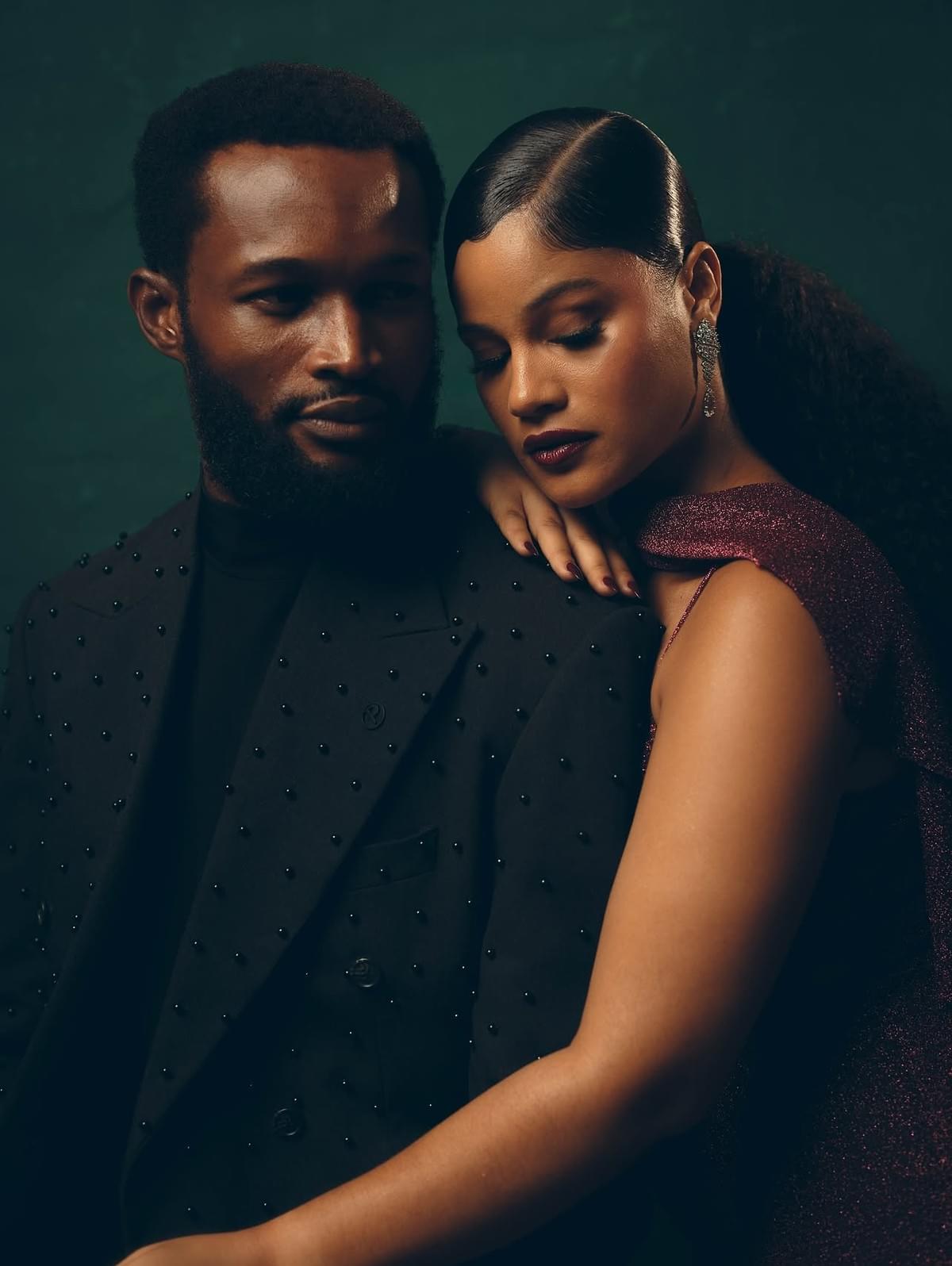
KASH: Absolutely. One of the recent projects I did involved a very large production with stylists, makeup artists, multiple looks everything was happening at once. The location ended up creating lighting problems because the sun shifted during the shoot, which affected consistency.
These are things clients don’t always understand. If you don’t fix it properly, people will just blame the photographer. But that’s where excellence comes in. No matter how difficult the process is, your responsibility is to make sure the final images still look seamless. When people eventually saw the photos, they were saying things like, “This looks like a painting.” Meanwhile, I knew how difficult the process had actually been behind the scenes.
REYNOLDS: How has Lagos culture influenced your visual storytelling?
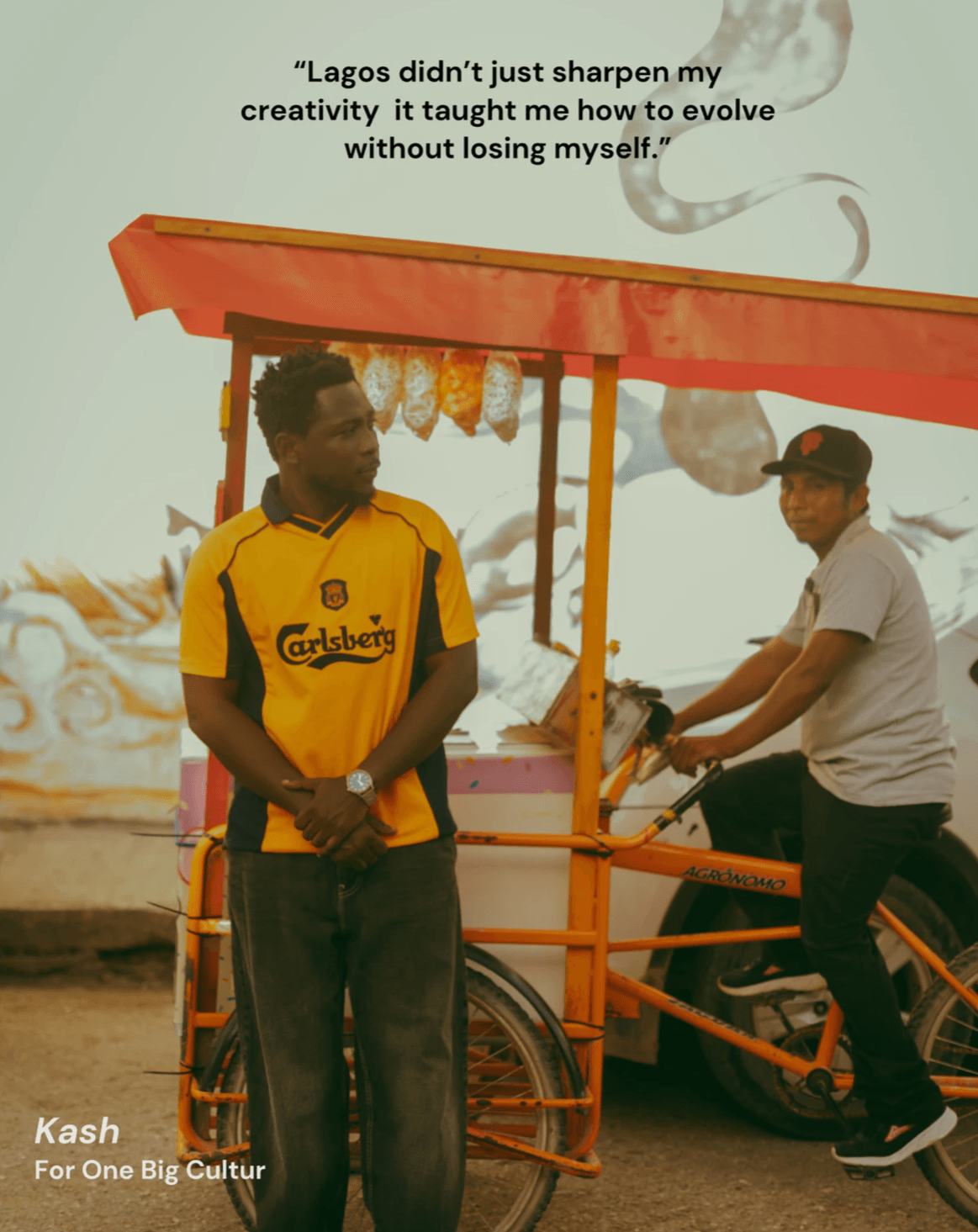
KASH: Moving to Lagos changed everything for me creatively. Before Lagos, my work was heavily documentary-based raw storytelling, emotion, realism. But Lagos is different. Lagos demands more. The city moves fast. The expectations are higher. The clients are more demanding. Lagos is basically the creative capital of West Africa. So, I had to evolve without losing myself. I had to find a way to merge documentary storytelling with the editorial and lifestyle aesthetics people in Lagos love. That balance shaped my photography into what it is today.
REYNOLDS: That’s adaptation at the highest level. what legacy do you hope your photography leaves behind in Nigeria and beyond?
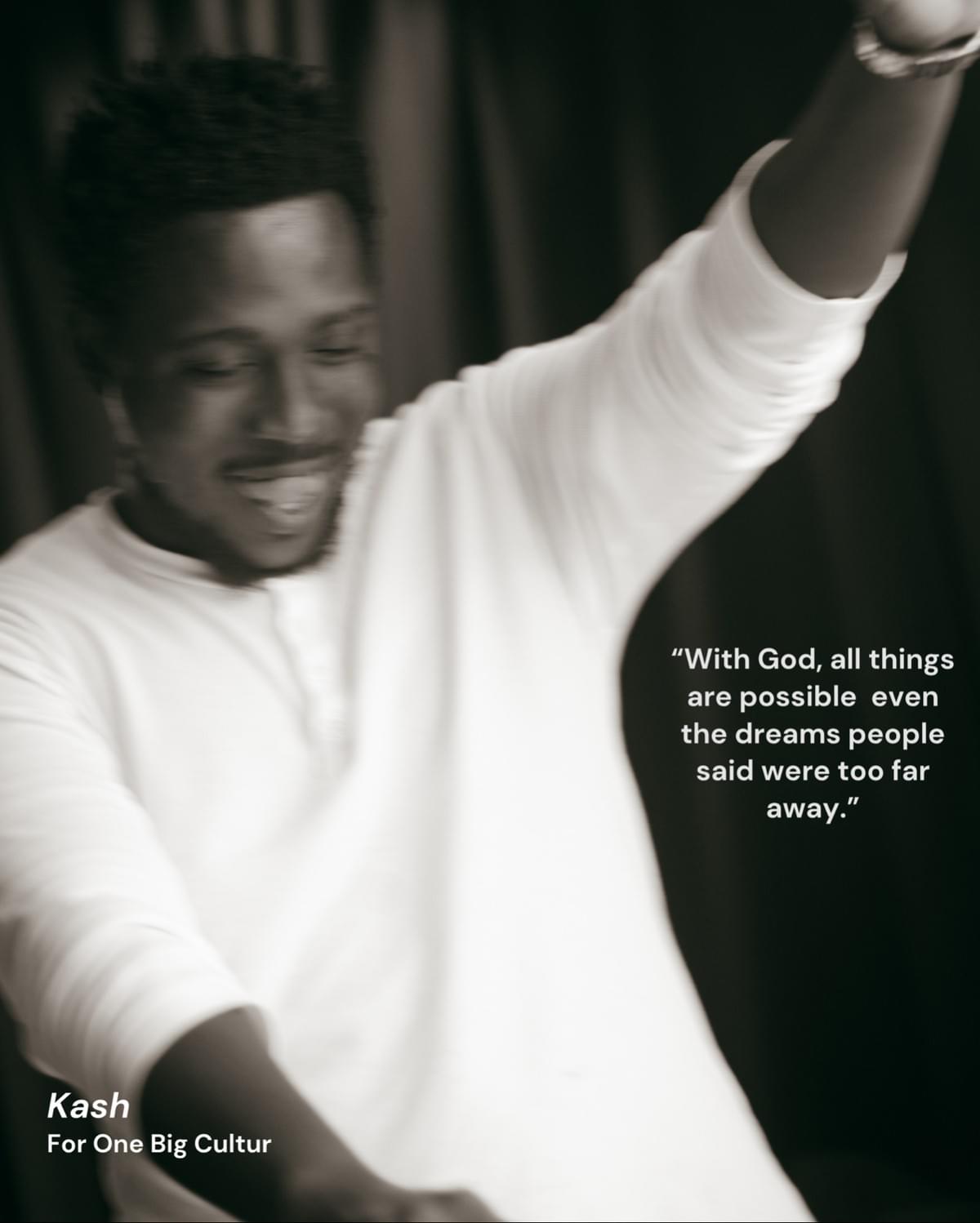
KASH: I want people to look at my journey and realize that it’s possible. I remember being in Benin and hearing people say Lagos was impossible to break into. People would tell me things like, “The industry is locked already,” or “Your work only looks good because of foreign weather.” But eventually, God opened doors. From photographing major brands like Pepsi and Access Bank, to shooting influential figures, funerals of national importance, and projects at the highest levels everything people said was impossible became possible. So that’s the legacy I want to leave behind: No matter where you start from, don’t let anyone convince you that your dreams are too far away. With God, all things are possible.
REYNOLDS: Before we move into the next part of the conversation, what’s one thing you believe photographers in Lagos need to do more of to elevate the industry collectively?
KASH: We need real community. And I say real community intentionally because a lot of people claim there’s community, but there really isn’t.
When I started photography in school, we had groups and circles, but it wasn’t genuine community. Real community means people support each other, push each other forward, and celebrate each other without envy.
When things started happening for me quickly, a lot of people around me became uncomfortable with it. Instead of support, there was jealousy, gossip, negativity. And honestly, that’s one of the things that made me realize how disconnected the creative industry can be sometimes.
The truth is that the world is big enough for everybody.
Look at the photography industry in places like the US or the UK there are thousands of photographers and they’re all thriving in different ways. When people work together, everybody benefits. There’s room for the 5K photographer, the 50K photographer, and the million-naira photographer.
One major thing we’re missing is representation.
"Outside Nigeria, photographers have agencies, repsentatives, management teams negotiating image rights and contracts for them. Here, most photographers are speaking for themselves and getting exploited without even realizing it."
The first time I ever got paid properly for image usage rights was from a foreign brand — Colgate. They explained licensing to me. They explained renewals. Right now, I still receive payments because those images are still being used commercially.
Meanwhile, many local brands don’t even understand why photographers should be paid for image usage beyond the shoot day itself.
If the top photographers in Nigeria had proper representation and structure, the industry would completely transform.
REYNOLDS: That’s actually very insightful because representation changes the frame work entirely.
KASH: Exactly. And honestly, that’s also where mentorship becomes important.
REYNOLDS: That actually leads perfectly into my next question. Have you ever mentored or been mentored? And how important has mentorship been in your journey?
KASH: I wouldn’t necessarily say I had formal mentors, but I definitely had big brothers people who gave me advice at different stages of life.
Even in medical school, there were older students guiding me through exams and helping me understand things better. That same principle applies to photography too.
You can’t know everything by yourself.
Especially in Nigeria where structure is still developing, mentorship helps you avoid mistakes that could slow you down for years. Sometimes all it takes is someone telling you, “You’re under-pricing yourself,” or “This is how contracts should work.”
Right now, I run a company called 88 Studio where we provide visual solutions for brands, publications, and individuals. One of the biggest projects we worked on eventually ended up featured on Vogue and the BBC.
But beyond the commercial side, one thing we intentionally do is mentorship.
Every year, we take in a small number of creatives usually between five to ten people and spend months helping them grow. We guide them through pricing, editing, creative direction, contracts, client communication, everything.
Most creatives don’t just need technical knowledge. They need clarity.
And mentorship should go beyond photography too. You should be able to pour life into people talk about history, culture, ideas, faith, even conspiracy theories once in a while. Just help expand their thinking.
That’s how people truly grow.
REYNOLDS: That’s real leadership, bro.
Five years from now, what barriers do you hope people will say Kash completely dismantled?
KASH: I pray people will say God used Kash to dismantle the lies people believe about christianity and Jesus.
There are so many misconceptions even within Christianity it self.
A lot of people aren’t practicing biblical Christianity anymore. There’s so much performance, so much confusion, so many additions that distract from the actual message of Christ.
For me, it’s simple:
Jesus Christ came to Earth, died for us, and gave us access to eternal life.
That’s the foundation.
A lot of people are so consumed by temporary things because they don’t fully understand eternity. They chase money, fame, validation, and when life becomes difficult, they completely lose hope.
But when you truly understand eternity and who Christ is, your perspective on life changes.
That’s the barrier I want to dismantle.
Not just through words but through how I live, how I create, and how I carry myself.
REYNOLDS: That’s heavy, bro. Very heavy.
KASH: Honestly, my mindset has changed over the years.
When I first started photography, I wanted to leave behind images and accomplishments. But now, I realize everything on Earth will eventually fade away.
Awards fade. Fame fades. Money fades.
How you lived , loved and how many people you pointed to truth
That’s the legacy I care about now.

REYNOLDS: That’s powerful, bro.
Thank you so much again for sitting down with us and sharing your story so openly. it's always important for creatives to tell their own stories in their own words because nobody can tell it better than them.
This conversation gave us a deeper understanding not just of your work, but of your heart, your mindset, and your purpose.
It’s been a pleasure having you on OneBigCultur.
Interviwed and Edited by Reynolds Mark
Design by Tosan Uche
Produced by Studio Mezue
Garments by Kash
Photographer credits Karu Romano : instagram : @Karuromano
location: MEXICO